Travel to Rome: 7 Ancient Sites to Explore
Rome, the Eternal City, stands as a living testament to over 2,700 years of continuous history. Walking through its cobblestone streets feels like stepping through a time portal where ancient monuments rise majestically alongside modern cafes and bustling piazzas. Every year, millions of travelers flock to Rome to witness the grandeur of the Roman Empire, and for good reason. The city houses some of the most significant archaeological treasures in the world, each telling stories of emperors, gladiators, senators, and citizens who shaped Western civilization.
Planning your journey through ancient Rome can feel overwhelming with so many historical sites competing for your attention. This comprehensive guide reveals seven essential ancient sites that capture the essence of Roman glory, helping you make the most of your visit while avoiding common tourist pitfalls. Whether you’re a history enthusiast, architecture lover, or curious traveler, these remarkable monuments will transform your understanding of how ancient Romans lived, worked, and conquered much of the known world.

Table of Contents
Why Exploring Ancient Rome Matters
Connecting With Western Civilization’s Roots
Ancient Rome serves as the foundation for modern Western society in ways that continue to influence our daily lives. Roman innovations in law, government, engineering, and language created frameworks still used today. The concept of a republic, checks and balances in government, and civil law all trace their origins to Roman political systems. By visiting these ancient sites, you witness firsthand where democracy evolved, where Senate debates shaped empires, and where architectural principles were established that architects still study and apply centuries later.
Understanding Architectural Innovation
Roman engineers revolutionized construction techniques that allowed them to build structures of unprecedented scale and durability. The invention of concrete enabled the construction of massive domes, arches, and aqueducts that have survived millennia. Standing beneath the Pantheon’s coffered dome or walking through the Colosseum’s sophisticated engineering reveals problem-solving genius that modern architects still admire. These visits provide tangible lessons in how innovation and ambition created buildings that continue to inspire contemporary design.
Experiencing Living History
Unlike museums where artifacts sit behind glass, Rome‘s ancient sites offer immersive experiences where you walk the same paths as Caesar, stand in arenas where gladiators fought, and touch stones placed by Roman hands two thousand years ago. This direct connection to history creates powerful emotional responses that books and documentaries cannot replicate. Recent studies show that experiential learning through historical site visits improves retention and understanding by up to 70 percent compared to traditional classroom education.
Appreciating Cultural Heritage Preservation
Visiting ancient Roman sites supports ongoing preservation efforts that protect these irreplaceable monuments for future generations. Ticket revenues fund archaeological research, structural stabilization, and conservation projects. The Colosseum alone generates over 50 million euros annually, with funds reinvested in maintenance and restoration. Your visit contributes directly to keeping these treasures accessible while raising global awareness about the importance of cultural heritage protection.
Gaining Perspective on Human Achievement
The scale and ambition of ancient Roman construction projects inspire awe and perspective about human capability. The Colosseum could hold 50,000 to 80,000 spectators with efficient crowd management systems. Roman aqueducts transported millions of gallons of water daily across hundreds of miles. These accomplishments remind us that human ingenuity and determination can overcome seemingly impossible challenges, offering inspiration for addressing modern global issues.
Enriching Personal Travel Experiences
Travelers who invest time in understanding historical context report significantly higher satisfaction with their Roman vacations. According to tourism research, visitors who explore ancient sites with historical knowledge rate their trips 40 percent more memorable than those who simply take photos without context. These experiences create lasting memories, stimulate intellectual curiosity, and often inspire continued learning about history, archaeology, and ancient cultures long after returning home.

How to Choose Which Ancient Sites to Visit
Assessing Your Available Time
Rome’s ancient sites span a large area, and visiting them properly requires realistic time allocation. If you have only two to three days, focus on the big three: the Colosseum, Roman Forum, and Pantheon, which provide a comprehensive overview of Roman civilization. With four to five days, add Palatine Hill, Baths of Caracalla, and a walk along the Appian Way. Week-long visitors can explore lesser-known sites like the Baths of Diocletian, Teatro di Marcello, and various temples scattered throughout the city. Consider that the Colosseum and Forum alone deserve three to four hours for a thorough visit, while the Pantheon requires only 30 to 45 minutes.
Matching Sites to Personal Interests
Different ancient sites appeal to different interests, so align your choices with what fascinates you most. Architecture enthusiasts should prioritize the Pantheon and Baths of Caracalla for their engineering marvels. History buffs focused on political intrigue will love the Roman Forum where Senate debates occurred. Those interested in entertainment and spectacle should spend extra time at the Colosseum and Circus Maximus. Visitors seeking quieter, contemplative experiences will appreciate the peaceful Appian Way, away from central Rome’s crowds.
Considering Crowd Levels and Peak Times
Rome attracts over 10 million tourists annually, with peak seasons from April to October creating significant crowds at major sites. The Colosseum receives up to 25,000 visitors daily during summer months, with wait times exceeding two hours without advance tickets. Lesser-known sites like the Baths of Caracalla see only 10 to 15 percent of Colosseum crowds, offering more relaxed exploration. Consider visiting major monuments at opening time around 8:30 AM or during late afternoon after 4 PM when tour groups depart. Winter months from November to February offer substantially smaller crowds with the added benefit of lower accommodation prices.
Evaluating Physical Requirements
Ancient Roman sites involve considerable walking, uneven surfaces, stairs, and limited shade, requiring honest assessment of physical capabilities. The Roman Forum and Palatine Hill feature rough ancient paving stones and significant elevation changes across 50 acres. The Colosseum requires climbing stairs to access upper levels with limited elevator access. The Appian Way involves walking on original Roman road stones that can be challenging for those with mobility issues. Summer temperatures frequently exceed 35 degrees Celsius with minimal shade at outdoor sites. Choose sites matching your fitness level and consider hiring private transportation for sites requiring extensive walking.
Budget Considerations and Combination Tickets
Entrance fees for Rome’s ancient sites range from free to 18 euros per location, making strategic ticket purchasing important for budget-conscious travelers. The Roma Pass offers excellent value at 32 euros for two included sites plus discounts on others, along with unlimited public transportation. The Colosseum full-experience ticket at 18 euros includes the Roman Forum and Palatine Hill, covering three sites for one price. The Pantheon recently introduced a 5-euro entrance fee. Free sites include the Circus Maximus grounds and portions of the Appian Way. Calculate your expected visits to determine whether combination passes or individual tickets offer better value.
Deciding Between Guided Tours and Independent Exploration
Choosing between guided tours and self-guided visits significantly impacts your experience quality and depth of understanding. Professional guided tours provide historical context, point out details easily missed, and answer questions, with prices ranging from 30 to 80 euros per person for small group experiences. Audio guides available at major sites cost 5 to 7 euros and allow self-paced exploration with expert commentary. Independent visits using guidebooks or apps offer maximum flexibility and lowest cost but require more research preparation. Consider guided tours for your first major sites like the Colosseum and Forum, then explore smaller sites independently once you understand Roman historical context.

The 7 Best Ancient Sites in Rome
The Colosseum: Rome’s Iconic Amphitheater
The Colosseum stands as ancient Rome’s most recognizable monument and largest amphitheater ever built, completed in 80 AD under Emperor Titus. This architectural masterpiece could hold between 50,000 and 80,000 spectators who gathered to watch gladiatorial contests, animal hunts, and elaborate staged productions. The structure measures 189 meters long, 156 meters wide, and originally stood 48 meters tall with four stories featuring 80 entrance arches that allowed efficient crowd management. Remarkably, the Romans could fill or evacuate the entire amphitheater in under 15 minutes through its sophisticated design.
The engineering innovations within the Colosseum revolutionized large-scale entertainment venue construction. The building utilized concrete extensively, allowing for the massive dome and vault structures that supported upper seating levels. A complex system of underground tunnels and chambers called the hypogeum housed gladiators, animals, and stage machinery before they emerged through trap doors into the arena. Archaeologists have discovered evidence of a sophisticated drainage system, and historical accounts describe how the arena could be flooded for mock naval battles called naumachiae.
Modern visitors can explore three levels of the Colosseum, walking where emperors and common citizens once sat segregated by social class. The first level housed the elite, the second accommodated middle-class citizens, and the upper levels were reserved for common people and women. Special tours allow access to the underground hypogeum and upper tiers, providing unique perspectives and photo opportunities. The recently opened arena floor reconstruction lets visitors stand where gladiators fought, offering an immersive historical experience.
Booking tickets in advance is essential as the Colosseum sells out days or weeks ahead during peak season. The standard ticket includes access to the Roman Forum and Palatine Hill, valid for two consecutive days. Consider booking the full experience ticket for an additional fee, which includes underground and upper-level access with mandatory guided tours. Nighttime visits, available during summer months, provide a dramatically different atmosphere with illuminated ancient stones and cooler temperatures.
The Colosseum represents more than just entertainment architecture; it symbolizes Roman engineering prowess, social structure, and the empire’s ability to organize massive public works. Estimates suggest that 400,000 people and over one million animals died in Colosseum events during its active centuries. While these statistics reveal brutal aspects of Roman culture, the building itself remains a testament to architectural innovation that influenced stadium design for two millennia.
Roman Forum: The Heart of Ancient Rome
The Roman Forum served as ancient Rome’s political, commercial, and social center for over a thousand years, functioning as the epicenter of Roman public life. This sprawling complex of ruins covers approximately 250 by 170 meters, containing temples, government buildings, triumphal arches, and public squares where senators debated laws, citizens conducted business, and religious ceremonies honored Roman gods. Walking through the Forum today requires imagination to reconstruct the grandeur that once defined this space, but the remaining columns, foundations, and structures reveal Rome’s organizational sophistication.
Major structures within the Forum include the Temple of Saturn, one of Rome’s oldest religious sites dating to 497 BC, which served as the state treasury. The Arch of Septimius Severus, erected in 203 AD, commemorates military victories with detailed relief sculptures. The Curia Julia housed the Roman Senate where politicians shaped laws governing millions of people across three continents. The Temple of Vesta, maintained by the Vestal Virgins, preserved Rome’s sacred fire that symbolized the city’s eternal existence. Each building contributes to understanding how Romans organized government, religion, and daily life.
The Via Sacra, or Sacred Way, represents Rome’s most important street, cutting through the Forum and serving as the route for religious processions and triumphal marches. Victorious generals paraded through this path with captured treasures and prisoners, celebrating military conquests before crowds of cheering citizens. The street connected the Capitoline Hill with the Colosseum, linking political power with public entertainment. Today’s visitors walk this same ancient road, following the footsteps of Julius Caesar, Augustus, and countless historical figures who shaped Western civilization.
Understanding the Forum’s layout enhances appreciation for its complexity and importance. The western end features political and administrative buildings while the eastern section contains more temples and religious structures. The Basilica Julia served as a courthouse where legal proceedings occurred, while the nearby Rostra functioned as a speaker’s platform for public announcements. The Temple of Antoninus and Faustina, remarkably well-preserved, demonstrates Roman architectural adaptation as it was converted into a Christian church, ensuring its survival through medieval times.
Visiting the Forum requires at least two to three hours for basic exploration, though history enthusiasts could easily spend an entire day studying the site. Bring water, sun protection, and comfortable walking shoes as the area lacks shade and involves uneven ancient paving. Consider visiting during early morning or late afternoon for better lighting and smaller crowds. Hiring a guide or using a detailed audio guide significantly improves understanding, as the ruins can appear confusing without historical context explaining each structure’s original purpose and significance.
Pantheon: Ancient Rome’s Architectural Marvel
The Pantheon represents the best-preserved major monument of ancient Rome and showcases engineering genius that continues to influence architects today. Commissioned by Marcus Agrippa during Emperor Augustus’s reign and rebuilt by Emperor Hadrian around 126 AD, this temple dedicated to all Roman gods features the world’s largest unreinforced concrete dome, spanning 43.3 meters in diameter. Remarkably, this dome held the record as the world’s largest dome for over 1,300 years until Florence’s cathedral was completed in the 15th century.
The building’s revolutionary design demonstrates advanced understanding of materials, mathematics, and structural engineering. The dome’s thickness decreases from 6.4 meters at the base to just 1.2 meters at the oculus, the circular opening at the dome’s center. Roman engineers used increasingly lighter materials in the concrete mix as they built upward, incorporating heavy travertine and basalt at the base, then volcanic tuff and pumice in upper sections. This graduated weight distribution prevents structural failure while maintaining the dome’s perfect hemispherical shape.
The oculus, measuring 8.2 meters in diameter, provides the Pantheon’s only natural light source and creates dramatic lighting effects as sunbeams sweep across the interior throughout the day. Visitors often wonder about rain entering through this opening; the floor features subtle drainage slopes and channels that efficiently remove water. On sunny days, the light beam creates a spotlight effect that moves across the walls and floor, highlighting different architectural features and creating photographic opportunities that change by the hour.
The Pantheon’s interior inspires awe with its perfect proportions, where the dome’s height equals its diameter, creating a perfect sphere that could theoretically fit entirely within the building. The coffered ceiling features 140 carved panels arranged in five rings, each row containing progressively smaller coffers that create an optical illusion of greater height. These decorative elements also served the practical purpose of reducing the dome’s weight without compromising structural integrity.
Unlike most ancient Roman sites, the Pantheon requires no imagination to appreciate its original splendor as it remains virtually intact. The building survived because it was converted into a Christian church in 609 AD, ensuring continued maintenance and protection. Today, the Pantheon serves as a church and contains tombs of important figures including the artist Raphael and Italian kings. The recent introduction of a 5-euro entrance fee helps fund preservation efforts while keeping the monument accessible to millions of annual visitors.
Palatine Hill: Rome’s Most Ancient Quarter
Palatine Hill stands as one of Rome’s seven hills and represents the most ancient part of the city where, according to legend, Romulus founded Rome in 753 BC. This elevated area offers spectacular views over the Roman Forum and Circus Maximus while containing extensive archaeological remains of imperial palaces, aristocratic homes, and temples spanning Rome’s entire history. The hill’s name gave origin to the word “palace,” reflecting its association with power and prestige throughout Roman history.
Archaeological evidence confirms continuous habitation on Palatine Hill from approximately 1000 BC, with wealthy Romans and eventually emperors choosing this prestigious location for their residences. The Domus Augustana served as the imperial palace for over 300 years, featuring elaborate rooms, courtyards, and gardens that demonstrated imperial wealth and power. The House of Augustus, where Rome’s first emperor lived, features remarkably preserved frescoes showing Roman artistic sophistication. The House of Livia, Augustus’s wife, contains some of Rome’s finest surviving wall paintings in vivid colors that have survived two millennia.
The Palatine Museum houses artifacts discovered during excavations, including sculptures, mosaics, and everyday objects that illuminate Roman daily life. The collection demonstrates how Romans lived at different social levels, from emperors to servants. Particularly impressive are the bronze items, pottery, and decorative elements that show the craftsmanship and aesthetic values of ancient Roman culture. The museum provides essential context for understanding the ruins visible across the hill.
The Farnese Gardens, created in the 16th century over imperial palace ruins, offer peaceful green spaces with spectacular viewing platforms overlooking the Forum and city beyond. These Renaissance gardens represent one of Europe’s earliest botanical gardens, featuring exotic plants, fountains, and shaded walkways. The contrast between ancient ruins and manicured gardens creates a unique atmosphere where visitors can rest while contemplating Rome’s layered history spanning nearly three millennia.
Visiting Palatine Hill requires planning for significant walking across a large area with considerable elevation changes. The site connects directly to the Roman Forum, and combination tickets include both locations plus the Colosseum. Allow two to three hours minimum to explore the major palace complexes, museum, and viewpoints properly. The site receives fewer visitors than the adjacent Forum, offering quieter exploration opportunities. Bring water and sun protection as shade is limited, particularly during summer months when temperatures can become uncomfortable.
Baths of Caracalla: Monumental Public Bathing Complex
The Baths of Caracalla represent one of ancient Rome’s largest and best-preserved public bathing complexes, completed in 216 AD under Emperor Caracalla. This massive facility could accommodate over 1,600 bathers simultaneously and covered approximately 27 acres, functioning as much more than a bathing area. Romans treated these thermae as social centers where citizens exercised, socialized, conducted business, and enjoyed leisure activities in luxurious surroundings that demonstrated imperial generosity and engineering prowess.
The complex featured an elaborate sequence of rooms with different temperatures and purposes. Visitors progressed through the apodyterium (changing room), palaestra (exercise yard), caldarium (hot room), tepidarium (warm room), and frigidarium (cold room), following a ritual that combined physical exercise, bathing, massage, and social interaction. The caldarium alone measured over 35 meters in diameter with soaring vaults that created an cathedral-like atmosphere. Sophisticated heating systems called hypocausts circulated hot air beneath floors and within walls, maintaining comfortable temperatures while impressing visitors with Roman technological advancement.
The decoration within the Baths of Caracalla rivaled the finest palaces, featuring marble columns, mosaic floors, sculptures, and frescoed walls throughout. Although much of this decoration was removed over centuries and now adorns museums worldwide, the remaining architectural framework reveals the original grandeur. The Farnese Bull and Farnese Hercules, now in Naples Archaeological Museum, originally decorated these baths. Archaeologists continue discovering colorful mosaics depicting athletes, sea creatures, and geometric patterns that covered thousands of square meters of floor space.
The baths operated using advanced hydraulic engineering that supplied and heated enormous quantities of water daily. Eleven aqueducts supplied Rome with water, and a dedicated branch served the Baths of Caracalla exclusively, delivering an estimated 8 million liters daily. This water was heated using furnaces that consumed vast amounts of wood, requiring sophisticated logistics to keep the facility operational. The underground service areas, accessible during special tours, reveal the infrastructure that supported luxury above, including furnace rooms, water distribution systems, and service corridors where enslaved workers labored to maintain operations.
Today’s visitors can explore the vast ruins and appreciate the scale of Roman public architecture. The site is significantly less crowded than the Colosseum or Forum, allowing peaceful exploration and excellent photography opportunities. Summer evening concerts and opera performances use the dramatic ruins as a backdrop, creating unforgettable cultural experiences. The site requires about one to two hours to explore thoroughly, and audio guides help visitors understand the original layout and function of different areas. The expansive grounds offer more shade than many Roman sites, making visits more comfortable during hot weather.
Circus Maximus: Rome’s Grand Racing Stadium
Circus Maximus served as ancient Rome’s largest entertainment venue, measuring approximately 600 meters long and 140 meters wide, capable of holding between 150,000 and 250,000 spectators, making it significantly larger than the Colosseum. This massive stadium hosted chariot races, religious ceremonies, and public celebrations for over a thousand years, from Rome’s early days through the 6th century AD. The thunderous excitement of racing factions, the danger of high-speed crashes, and the spectacle of victory parades made Circus Maximus the center of Roman popular entertainment.
Chariot racing represented ancient Rome’s most popular sport, with professional teams called factions identified by colors: red, white, blue, and green. Fans supported their factions with passionate loyalty that sometimes erupted into violence, similar to modern soccer hooliganism. Successful charioteers became celebrities earning enormous wealth, with some historical records indicating top racers earned more than gladiators or even senators. The races themselves were extraordinarily dangerous, with crashes called “shipwrecks” frequently injuring or killing drivers as chariots collided at high speeds around the sharp turns.
The stadium’s architecture featured a long central barrier called the spina decorated with statues, obelisks, and lap counters. Two Egyptian obelisks originally adorned the spina; one now stands in Piazza del Popolo, and the other in front of the Lateran Basilica, transplanted during Renaissance renovations. The starting gates, called carceres, used sophisticated mechanical systems to ensure fair starts for up to twelve chariots simultaneously. The stadium’s oval shape and banked turns allowed drivers to maintain high speeds while providing excellent sightlines for spectators throughout the enormous seating area.
Archaeological excavations continue revealing Circus Maximus structures, with recent work uncovering portions of the seating areas, gates, and underground shops that served spectators. A viewing platform installed in recent years allows visitors to see excavated foundations and visualize the stadium’s original appearance. Interpretive panels and augmented reality applications help visitors imagine how this now-empty field once teemed with hundreds of thousands of cheering Romans watching the empire’s most popular entertainment.
Unlike other Roman sites requiring entrance fees, Circus Maximus remains free to visit as it functions partly as a public park. The open grassy area hosts concerts and public events, continuing its tradition as a gathering place for large crowds. The site offers dramatic views of Palatine Hill rising on one side, providing excellent photography opportunities particularly at sunset. While less visually impressive than Rome’s better-preserved monuments, Circus Maximus offers important context for understanding Roman entertainment culture and the scale of public spectacles that kept citizens engaged and emperors popular.
Appian Way: Ancient Rome’s Strategic Highway
The Appian Way, or Via Appia Antica, represents one of Rome’s oldest and most strategically important roads, constructed in 312 BC by censor Appius Claudius Caecus. This ancient highway originally connected Rome to Brindisi on Italy’s southeastern coast, covering approximately 560 kilometers and facilitating military movement, trade, and communication throughout the expanding Roman Republic. The road’s importance earned it the title “Regina Viarum” or Queen of Roads, and substantial sections remain intact today, allowing visitors to walk on original Roman paving stones laid over 2,300 years ago.
Roman engineering excellence is evident in the Appian Way’s construction, which employed sophisticated techniques ensuring durability and longevity. The road’s foundation consisted of multiple layers: large stones and gravel created a stable base, followed by smaller stones and sand, topped with carefully fitted basalt paving blocks. This construction method created a raised, cambered surface that facilitated drainage while supporting heavy military and commercial traffic. The precise stone fitting, requiring no mortar, allowed the road to flex slightly without cracking, contributing to its remarkable survival.
The Appian Way served multiple functions beyond transportation, most notably as a burial ground for Rome’s elite. Roman law prohibited burials within city walls, making roads outside Rome popular cemetery locations. The Appian Way features extraordinary concentrations of tombs, mausoleums, and commemorative monuments belonging to wealthy families, politicians, and eventually Christian martyrs. Walking along the ancient road, visitors pass elaborate funerary monuments that demonstrate Roman attitudes toward death, ancestry, and memory preservation.
Several significant sites line the Appian Way, making it a destination for historical exploration beyond the road itself. The Catacombs of San Callisto and San Sebastiano offer underground tours through early Christian burial chambers carved into the volcanic rock. The Tomb of Cecilia Metella, a massive circular mausoleum from the 1st century BC, dominates the landscape and provides insight into aristocratic Roman funerary practices. The Villa of the Quintilii, a vast suburban estate with palace ruins, baths, and an amphitheater, demonstrates how wealthy Romans lived in countryside estates while maintaining connections to the city.
Visiting the Appian Way offers a dramatically different experience from Rome’s central ancient sites, with opportunities for peaceful walking, cycling, or driving along the historic road surrounded by umbrella pines and ruins. The initial stretch near the Porta San Sebastiano features the most intact paving and highest concentration of monuments. Sundays see the road closed to vehicle traffic, creating ideal conditions for walking or cycling. Several bike rental shops near the ancient gate offer a popular way to cover more distance while experiencing the road as ancient travelers might have. Pack water and snacks as services are limited, and wear sturdy shoes as the ancient basalt stones can be uneven and challenging to walk on for extended periods.
Common Mistakes to Avoid When Visiting Ancient Sites
Arriving Without Advance Tickets
One of the most frustrating and avoidable mistakes is arriving at major sites like the Colosseum without pre-purchased tickets, resulting in wait times that can exceed three hours during peak season. The Colosseum, Roman Forum, and Palatine Hill sell out days or weeks in advance, particularly from April through October. Visitors who haven’t planned ahead face either missing these essential sites entirely or wasting half their day waiting in ticket lines under the brutal Roman sun. The Colosseum’s official website allows ticket purchases up to 60 days in advance, and various authorized resellers offer convenient booking options.
Beyond the Colosseum, other popular sites like the Borghese Gallery implement strict capacity limits and require advance reservations, often selling out weeks ahead. Even the recently ticketed Pantheon experiences long entrance lines during peak hours. Smart travelers research ticket requirements for all intended sites and purchase them online before their trip. Roma Pass holders still need to reserve time slots for the Colosseum, requiring advance planning even with the discount card. The small booking fees of 2 to 4 euros represent excellent value considering the time and frustration saved.
Third-party tour companies offer skip-the-line access bundled with guided tours, providing both convenience and educational value. While these cost more than standard tickets, the combination of guaranteed entry and expert commentary justifies the premium for many visitors. Be cautious of unauthorized ticket scalpers outside major monuments who sell overpriced tickets or fake admission that results in denied entry. Only purchase tickets from official sources or reputable tour operators with verified reviews.
For budget-conscious travelers, some sites like Circus Maximus, portions of the Appian Way, and various smaller ruins require no tickets and see fewer crowds. Planning an itinerary that balances popular ticketed sites with free attractions maximizes experiences while managing costs. Every first Sunday of the month, state-run museums and archaeological sites offer free admission, though these days attract enormous crowds that may diminish the experience quality.
The lesson extends beyond Rome to all major European tourist destinations: research ticket requirements early, purchase online in advance, and arrive with confirmations ready on your phone or printed. This preparation transforms potentially stressful situations into smooth experiences, allowing more time for actual exploration rather than administrative frustration.
Visiting During Peak Hours and Seasons
Timing visits poorly results in fighting crowds, suffering extreme heat, and missing the best light for photography at Rome’s ancient sites. Summer months from June through August bring temperatures regularly exceeding 35 degrees Celsius with intense sun exposure at outdoor monuments lacking shade. The Colosseum’s stone surfaces radiate heat, creating oven-like conditions during midday hours. Combined with peak tourist season, summer visits mean sharing the experience with thousands of other visitors, making photography difficult and diminishing the atmosphere that makes these sites special.
Morning hours between 8:30 and 10:00 AM offer the best visiting conditions at major sites, with fewer crowds, cooler temperatures, and excellent lighting for photography. The Roman Forum opens at 8:30 AM, and arriving at opening time provides nearly private exploration opportunities before tour groups arrive around 10:30. Late afternoon visits after 4:00 PM also offer advantages as tour groups depart and temperatures become more comfortable. Golden hour light enhances photography, particularly at sites with western exposure like the Forum’s viewpoints from Palatine Hill.
Seasonal timing dramatically affects visit quality, with spring April to May and fall September to October providing ideal weather conditions and moderate crowds. Winter months November through February offer the smallest crowds and lowest prices but bring shorter daylight hours, occasional rain, and some sites closing earlier. Many travelers find winter visits worthwhile despite weather uncertainties, as they experience major monuments with a fraction of summer crowds and can explore at a relaxed pace.
Certain days see higher or lower visitor numbers based on predictable patterns. Mondays often attract larger crowds as many museums close, pushing visitors toward ancient sites. Weekends bring both tourists and local visitors, increasing congestion. Midweek visits, particularly Tuesday through Thursday, typically offer the best crowd conditions. Free admission Sundays create massive crowds that overwhelm sites and create long entrance lines, generally making these days poor choices despite the cost savings.
Strategic planning considering both daily and seasonal timing transforms the experience quality at Rome’s ancient sites. Checking weather forecasts, sunrise and sunset times, and expected crowd levels helps optimize visit timing. Flexibility in scheduling allows taking advantage of unexpected opportunities, such as visiting outdoor sites on rare rainy days when most tourists seek indoor alternatives, creating unusual opportunities for nearly private experiences at normally crowded monuments.
Neglecting Comfortable Footwear and Sun Protection
Ancient Roman sites involve extensive walking on uneven surfaces including original Roman paving stones, modern cobblestones, gravel paths, and countless stairs, making inappropriate footwear a source of serious discomfort and potential injury. Visitors wearing fashionable but impractical shoes like heels, thin-soled sandals, or brand-new footwear frequently experience blisters, turned ankles, or foot pain that ruins their site visits. The Roman Forum and Palatine Hill alone cover over 50 acres with significant elevation changes and ancient stone surfaces that can be slippery when wet.
Proper footwear requires closed-toe shoes with good arch support, cushioned soles, and proven comfort over extended walking distances. Well-broken-in athletic shoes or hiking shoes represent ideal choices. Many fashion-conscious travelers resist practical footwear, prioritizing style over comfort, only to regret this decision hours into their visit when pain prevents continuing. Rome rewards practical preparation, and no outfit looks good when the wearer is limping and unable to enjoy the experience.
Sun protection receives insufficient attention from many visitors, resulting in severe sunburns, heat exhaustion, and long-term sun damage. Rome’s ancient sites offer minimal shade, exposing visitors to intense Mediterranean sun for hours. A high-SPF sunscreen applied regularly, a wide-brimmed hat, and sunglasses represent essential gear, not optional accessories. Many first-time visitors underestimate sun intensity, particularly during spring and fall when temperatures feel moderate but UV exposure remains dangerously high.
Hydration constitutes another critical consideration that visitors frequently neglect until experiencing headaches, dizziness, or heat-related illness. Rome’s climate and extensive walking create significant fluid loss, requiring regular water consumption throughout the day. Carrying a refillable water bottle and using Rome’s numerous public drinking fountains keeps you hydrated without constantly purchasing expensive bottled water. Most ancient sites lack convenient food and drink vendors once you’re inside, so arriving prepared with water prevents unnecessary discomfort.
Lightweight, breathable clothing in light colors helps manage heat during warm weather visits, while layering options accommodate temperature variations between morning, midday, and evening. Many churches and indoor sites require covered shoulders and knees, so modest clothing that meets dress codes while remaining comfortable in heat represents the best approach. A light scarf serves multiple purposes: meeting dress codes, protecting neck and shoulders from sun, and providing warmth during cooler evenings.
Skipping Historical Context and Guided Information
Visiting ancient ruins without understanding their historical significance and original appearance results in seeing random old stones rather than appreciating revolutionary architecture and pivotal historical locations. The Roman Forum appears as a confusing jumble of columns and foundations without context explaining which ruins housed the Senate, where Julius Caesar was assassinated, or how the space functioned as ancient Rome’s political and commercial center. This lack of understanding diminishes the emotional impact and educational value that makes these sites meaningful beyond simple sightseeing.
Professional guided tours transform ruins into vivid historical experiences through expert storytelling, detailed explanations, and answers to questions. A knowledgeable guide points out easily missed details, explains architectural innovations, and shares historical anecdotes that bring ancient Rome to life. Group tours typically cost 30 to 60 euros per person, while private tours range from 150 to 300 euros but offer personalized experiences. Many visitors consider this investment worthwhile, rating their comprehension and enjoyment significantly higher than self-guided visits.
Audio guides available at major sites offer middle-ground options between fully independent visits and expensive guided tours, typically costing 5 to 7 euros for rental. These provide expert commentary that can be accessed at your own pace, allowing flexibility while ensuring access to historical information. Quality varies between official site audio guides and third-party apps, so research options before choosing. Rick Steves’ audio tours, available free through his app, receive particularly high ratings from travelers for their informative yet entertaining approach.
Pre-visit research using guidebooks, documentaries, or online resources significantly improves on-site comprehension even without guides or audio tours. Understanding basic Roman history, architectural terminology, and site layouts before arriving allows visitors to appreciate what they’re seeing and make connections between different monuments. Spending just two or three hours studying before your trip pays enormous dividends in appreciation and understanding during actual visits.
Virtual reality and augmented reality applications increasingly offer innovative ways to visualize ancient sites as they originally appeared. Several apps overlay reconstruction images on current ruins, helping visitors understand original structures. The Colosseum offers VR experiences showing gladiatorial contests and how the amphitheater functioned, creating immersive educational experiences. While technology enhances understanding, it should complement rather than replace real-world observation and appreciation of the actual ancient structures before you.
Underestimating Required Time at Each Site
Rushing through ancient sites to check boxes on a sightseeing list prevents meaningful engagement with the history, architecture, and atmosphere that make these monuments special. Many visitors allocate insufficient time, particularly at complex sites like the Roman Forum and Palatine Hill, attempting to see everything in an hour when thorough exploration requires three to four hours minimum. This rushed approach creates stress, forces skipping important areas, and results in leaving with superficial understanding rather than genuine appreciation.
The Colosseum deserves at least 90 minutes to two hours for basic visits, exploring the ground floor, first and second levels while absorbing the atmosphere and understanding how the amphitheater functioned. Extended visits including underground hypogeum and upper tiers require three to four hours with mandatory guided tours. Simply taking photos and walking through in 30 minutes misses the opportunity to understand Roman engineering, social organization reflected in seating arrangements, and the historical events that occurred within these walls.
The Roman Forum and Palatine Hill function as a combined archaeological park requiring three to four hours minimum for meaningful exploration. These sites contain dozens of significant structures spread across large areas with considerable walking distances between them. Attempting to visit both in
Final Thoughts: Travel to Rome and Experience the Eternal City at Its Best
Traveling to Rome is far more than visiting a destination—it is about experiencing a city that seamlessly blends ancient history, breathtaking panoramas, luxury lifestyle, and modern travel experiences. Known as the Eternal City, Rome continues to attract travelers from all over the world thanks to its iconic landmarks, vibrant atmosphere, and unforgettable cultural heritage.
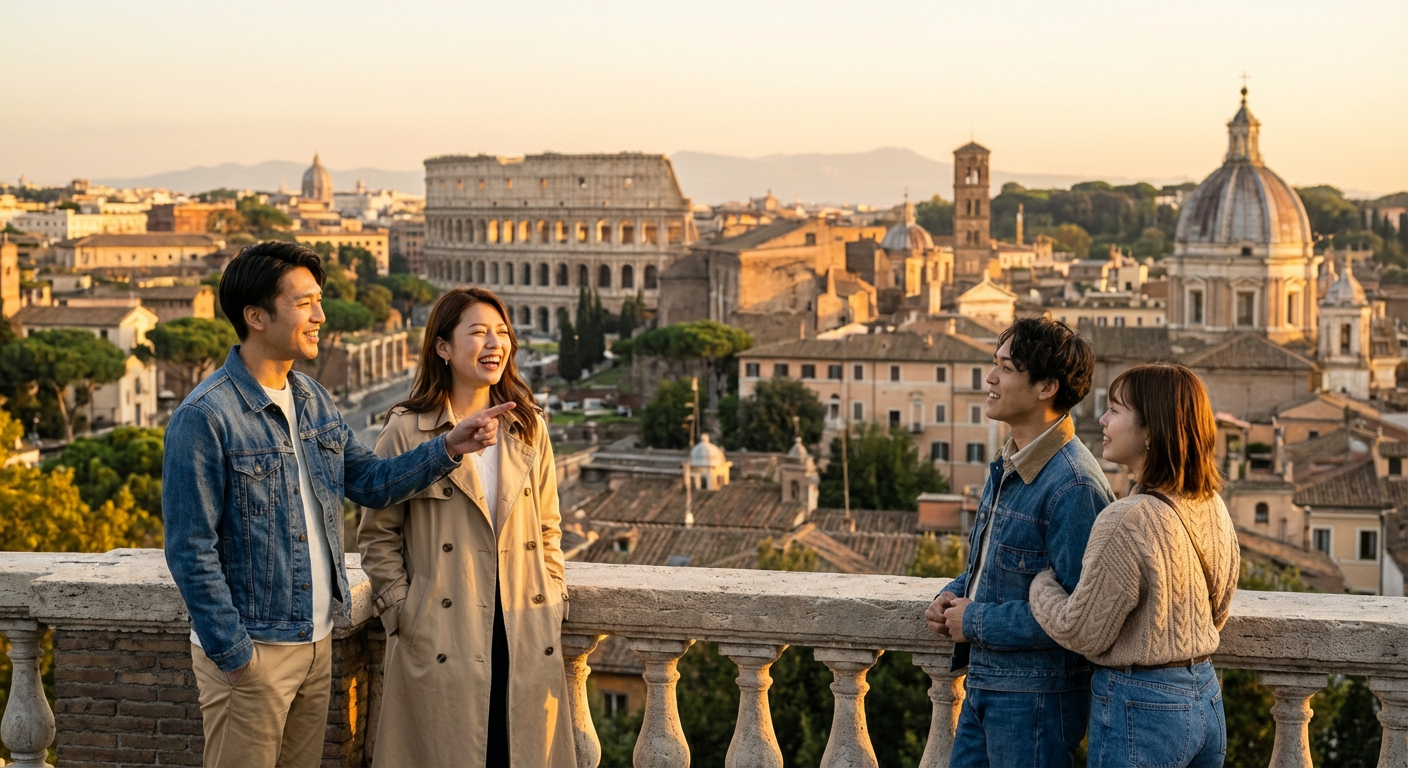
From the Colosseum and Roman Forum to panoramic viewpoints overlooking historic rooftops and domes, every corner of Rome tells a story. At the same time, the city offers a refined and contemporary side, with luxury restaurants, rooftop terraces, fine dining experiences, and stylish neighborhoods that appeal especially to young couples and lifestyle travelers.
A Destination for Every Type of Traveler
Rome is a city that adapts to your travel style. History lovers can explore ancient ruins and world-class museums, while food enthusiasts can indulge in authentic Italian cuisine and gourmet dining experiences. Romantic travelers and young couples will find Rome especially captivating, thanks to its intimate streets, sunset views, and elegant restaurants that create the perfect setting for meaningful moments.
For those seeking a premium experience, Rome offers high-end hotels, luxury dining, and exclusive experiences that elevate any trip. At the same time, its welcoming atmosphere and vibrant street life make it accessible and enjoyable for all visitors.
Call to Action: Start Planning Your Rome Trip Today
There has never been a better time to travel to Rome. Whether you are planning a romantic getaway, a luxury city break, or a cultural adventure, Rome offers endless possibilities.
Plan your trip today, book the best experiences in advance, and design an itinerary that allows you to fully enjoy everything the Eternal City has to offer.
Take the first step toward an unforgettable journey and discover why Rome remains one of the most loved travel destinations in the world.
Social Proof: A City Loved by Millions
Rome welcomes more than 15 million visitors every year, consistently ranking among the top destinations in Europe and worldwide. Travelers praise the city for its unique mix of history, gastronomy, and lifestyle experiences.
💬 “Rome is a city that exceeds expectations—romantic, inspiring, and rich in unforgettable experiences.”
High visitor satisfaction and repeat tourism confirm Rome’s reputation as a must-visit destination.
By combining history, luxury, culture, romance, and modern lifestyle, Rome continues to inspire travelers across generations. No matter how many times you visit, the city always has something new to reveal.
Travel to Rome and let the Eternal City turn your trip into a story you will never forget.