Venice Travel Guide for First Time Visitors: Everything You Need to Know
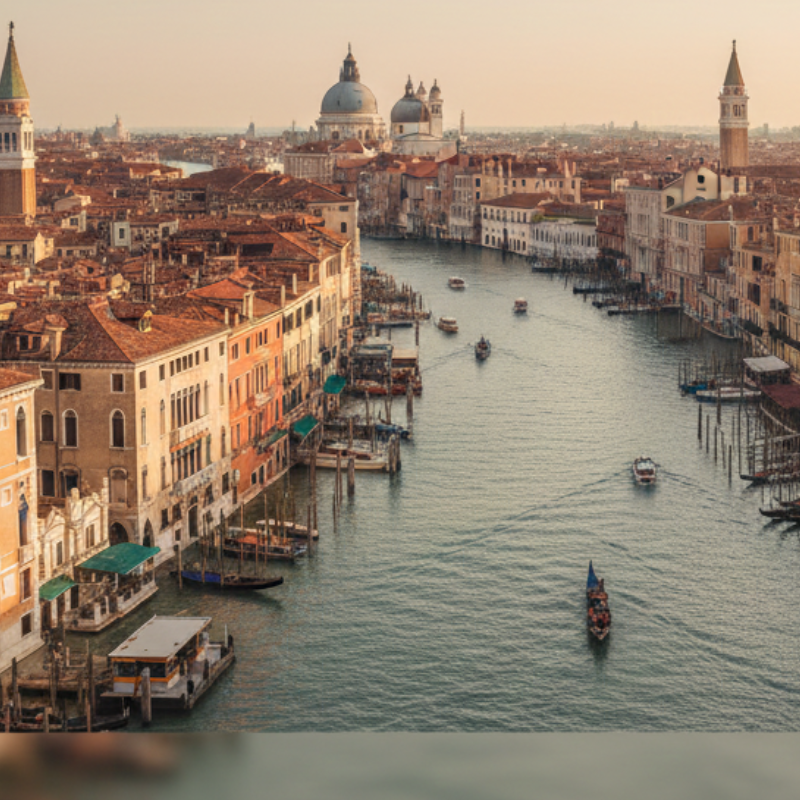
Imagine stepping off a water bus onto a centuries-old stone dock, surrounded by Gothic palaces rising directly from turquoise canals. The scent of fresh pasta and sea salt fills the air as gondolas glide silently past, their gondoliers singing traditional Italian melodies. This isn’t a movie set or a theme park—this is Venice, one of the most extraordinary cities ever built by human hands.
For first-time visitors, Venice can feel overwhelming. With no cars, confusing winding streets, and a labyrinth of canals replacing traditional roads, navigating this floating city requires preparation and insider knowledge. Whether you’re dreaming of a romantic gondola ride through hidden waterways, eager to explore world-class art museums, or simply wanting to experience authentic Italian culture, this comprehensive guide will transform you from a confused tourist into a confident Venice explorer.
In this Venice travel guide for first-time visitors, you’ll discover when to visit, where to stay, what to see, how to navigate the vaporetto system, which restaurants serve authentic Venetian cuisine, and most importantly, how to avoid the common mistakes that plague unprepared travelers. By the end of this guide, you’ll have everything you need to plan an unforgettable first trip to La Serenissima—the Most Serene Republic of Venice.
Table of Contents
Why Venice Should Be on Every Traveler’s Bucket List
A City Unlike Any Other on Earth
Venice isn’t just another beautiful European city—it’s an architectural miracle that defies logic and gravity. Built on 118 small islands connected by over 400 bridges and 150 canals, Venice has no roads accessible to cars. Instead, water serves as the primary transportation network, creating an urban experience found nowhere else on the planet. This unique characteristic alone makes Venice worthy of your travel bucket list, offering a glimpse into a pre-automotive world where boats replaced carriages and canals substituted for streets.
Living History and Cultural Significance
As a UNESCO World Heritage Site, Venice represents over 1,500 years of continuous habitation and cultural achievement. From the 9th to the 18th century, Venice was one of the world’s most powerful maritime republics, controlling trade routes between Europe and Asia. This wealth and power translated into breathtaking architecture, world-changing art, and cultural innovations that shaped Western civilization. Walking through Venice today means literally stepping through living history, where Byzantine domes, Gothic palaces, and Renaissance masterpieces exist not in museums but as the everyday fabric of the city.
Architectural Wonders You Can’t Find Anywhere Else
Venetian architecture represents a unique fusion of Byzantine, Gothic, and Renaissance styles that evolved in isolation from mainland Europe. The city’s buildings showcase distinctive features like pointed arches, ornate facades decorated with colored marble, and the famous Venetian Gothic style seen in palazzos along the Grand Canal. St. Mark’s Basilica alone contains over 85,000 square feet of golden mosaics—more than any other church in the world. The Doge’s Palace, with its pink-and-white geometric patterns and delicate Gothic tracery, appears to float above its arcade, defying architectural conventions.
The Urgency Factor: Visit Before It’s Too Late
Venice faces existential threats that make visiting sooner rather than later essential. The city sinks approximately 1-2 millimeters per year due to natural geological settling and the compression of clay soil beneath the lagoon. Combined with rising sea levels from climate change, Venice experiences increasingly frequent acqua alta (high water) flooding events. The MOSE flood barrier system, completed in 2020 at a cost of $6.5 billion, provides temporary protection, but scientists predict Venice could become uninhabitable within this century. Visiting now means experiencing this architectural treasure while it still functions as a living city rather than an abandoned relic.
World-Class Art and Cultural Treasures
Venice has been home to some of history’s greatest artists, including Titian, Tintoretto, Veronese, and Canaletto. The city houses extraordinary art collections, from the Gallerie dell’Accademia’s Venetian masters to the Peggy Guggenheim Collection’s modern art. Beyond museums, Venice’s churches contain priceless artworks—Tintoretto’s massive paintings in the Scuola Grande di San Rocco are considered among the greatest artistic achievements of the Renaissance. For art lovers, Venice offers an unparalleled concentration of masterpieces in their original contexts.
Gateway to Northern Italy’s Hidden Gems
Venice serves as an ideal base for exploring the Veneto region and Northern Italy. The romantic city of Verona (Romeo and Juliet’s setting) lies just 75 miles away. The Dolomite mountains, a UNESCO World Heritage Site with spectacular hiking and skiing, are accessible within two hours. The prosecco wine region, with its rolling vineyards and charming hillside towns, offers perfect day trips. Historic Padua, with its remarkable frescoes by Giotto, sits just 25 miles from Venice. Using Venice as your hub allows you to experience diverse Italian landscapes, cuisines, and cultures within easy reach.
How to Plan Your First Trip to Venice
Choosing the Best Time to Visit
Spring (April-May): This represents the sweet spot for first-time visitors. Temperatures range from 55-70°F (13-21°C), perfect for comfortable walking. The city blooms with flowers, outdoor cafes open their terraces, and tourist crowds remain manageable compared to summer. The downside? April can bring occasional rain and acqua alta flooding, so pack waterproof shoes. Late May sees prices begin rising as summer approaches.
Summer (June-August): Peak tourist season brings sweltering heat (often exceeding 85°F/29°C), massive crowds, and premium prices. St. Mark’s Square becomes a sea of tourists, and popular restaurants require reservations days in advance. However, summer offers the longest daylight hours (sunset around 9 PM in June), perfect for evening strolls and outdoor dining. If visiting in summer, book accommodations 3-4 months ahead and arrive at major attractions when they open.
Fall (September-October): Many consider this the absolute best time for first-time visitors. September still feels summery with temperatures around 70-75°F (21-24°C), but crowds thin considerably after Italian schools resume. October brings cooler weather and occasional rain but offers authentic Venetian atmosphere without overwhelming tourism. Fall also coincides with the Venice Film Festival (late August-early September) and the Regata Storica boat race (first Sunday in September).
Winter (November-March): Off-season Venice reveals its most authentic character. Locals reclaim their city, prices drop 30-50%, and you’ll experience Venice without elbowing through crowds. However, winter brings challenges: frequent acqua alta flooding (November-January peak), cold dampness (40-50°F/4-10°C), and reduced daylight hours. The Carnival of Venice (typically February) creates a magical atmosphere but also brings crowds and elevated prices. Winter suits adventurous travelers seeking authenticity over comfort.
Avoiding Acqua Alta: These flooding events occur primarily October through January when astronomical high tides combine with strong winds. Check forecasts at www.comune.venezia.it, where sirens sound 3-4 hours before flooding. Pack waterproof boots and plan indoor activities during predicted flooding. Most flooding affects only 12% of the city, primarily St. Mark’s Square (the lowest point), and recedes within hours.
Determining How Long to Stay
For first-time visitors, 3-4 days provides the ideal balance. This allows enough time to see major attractions without rushing, explore different neighborhoods, take a day trip to nearby islands, and still have flexibility for getting lost in Venice’s enchanting backstreets—often the most memorable experience.
A sample 3-day itinerary: Day 1 covers St. Mark’s Basin area (Basilica, Doge’s Palace, Bridge of Sighs). Day 2 explores the Rialto area, Grand Canal vaporetto ride, and Dorsoduro neighborhood. Day 3 takes you to Murano and Burano islands. This pace allows for leisurely meals, spontaneous discoveries, and rest periods without constant rushing.
Two days feels rushed, forcing you to skip significant attractions or race through them without appreciation. Five or more days suits travelers wanting deeper immersion, time for multiple day trips, or simply the luxury of experiencing Venice’s rhythms without a packed schedule.
Selecting the Right Neighborhood (Sestiere)
Venice divides into six sestieri (districts), each offering distinct character and advantages:
San Marco: The tourist epicenter surrounding St. Mark’s Square. Advantage: walk to all major attractions. Disadvantages: expensive, crowded, filled with tourist-oriented businesses. Best for travelers prioritizing convenience over authenticity and willing to pay premium prices.
Cannaregio: The most residential sestiere, home to 13,000 Venetians. Offers authentic atmosphere, excellent restaurants frequented by locals, and the historic Jewish Ghetto. Located in northern Venice with good vaporetto connections. Prices run 20-30% lower than San Marco. Ideal for first-timers wanting authentic Venice while maintaining accessibility to attractions.
Dorsoduro: The artistic and student quarter, home to the Accademia Gallery and Peggy Guggenheim Collection. Offers a bohemian vibe with excellent bars and restaurants. The Zattere waterfront provides stunning sunset views. Popular with younger travelers and art enthusiasts. Moderate prices with good vaporetto access.
San Polo and Santa Croce: These adjacent sestieri center around the Rialto Market and offer a mix of tourist areas and residential neighborhoods. Good restaurant selection, central location, and moderate prices make them excellent first-time visitor choices. The Rialto area can be congested during the day but quiets in evenings.
Castello: The largest and most diverse sestiere, ranging from touristy areas near San Marco to quiet residential zones in the east. Eastern Castello offers the most authentic, affordable Venice experience but requires longer walks to major attractions. Best for budget-conscious travelers who don’t mind extra walking.
Setting a Realistic Budget
Budget Traveler ($100-150 per person/day): Hostel bed or budget hotel ($50-80), inexpensive restaurants and markets ($30-40), vaporetto pass ($25), one major attraction ($20), miscellaneous ($10).
Mid-Range Traveler ($200-350 per person/day): Comfortable 3-star hotel ($120-200), mix of casual and nice restaurants ($60-80), vaporetto pass and occasional water taxi ($40), multiple attractions ($40), shopping and extras ($30).
Luxury Traveler ($500+ per person/day): High-end hotel on the Grand Canal ($400+), fine dining experiences ($150+), private water taxis ($100+), guided tours and experiences ($100+), shopping ($100+).
Key budget tips: Accommodation represents the largest expense—book early for better rates. Eating away from San Marco saves 30-40%. The 72-hour vaporetto pass ($40) costs less than individual tickets if you take 6+ rides. Many churches with significant artwork charge only €3 entrance fees. Wandering backstreets, crossing bridges, and absorbing atmosphere costs nothing.
Booking Essential Attractions in Advance
Doge’s Palace and St. Mark’s Basilica: These top attractions require advance booking during peak season to avoid 2-3 hour waits. Book the combined “Secret Itineraries” tour of Doge’s Palace ($28) at least one week ahead—it includes skip-the-line access plus hidden areas like prison cells and torture chambers. St. Mark’s Basilica is free but requires timed-entry reservations ($3 booking fee). Book 2-3 days ahead for peak season, or arrive when it opens (9:30 AM) for shorter waits.
Gondola Rides: Official rates are €80-100 for 30-40 minutes (up to 6 passengers), higher in evenings. Book through your hotel or find official gondola stands throughout the city. Avoid unauthorized gondoliers who may overcharge. Consider sharing costs with other travelers to split the expense.
Restaurants: Popular establishments in Cannaregio and Dorsoduro require reservations 2-3 days ahead for dinner during high season. Use TheFork app or call directly. Lunch typically doesn’t require reservations except at the most famous spots.
Packing Smart for Venice
Footwear: Comfortable, broken-in walking shoes are non-negotiable. You’ll walk 15,000-20,000 steps daily on uneven cobblestones, over bridges, and through narrow lanes. Bring waterproof shoes or boots for potential acqua alta or rain. Avoid heels, new shoes, or flip-flops.
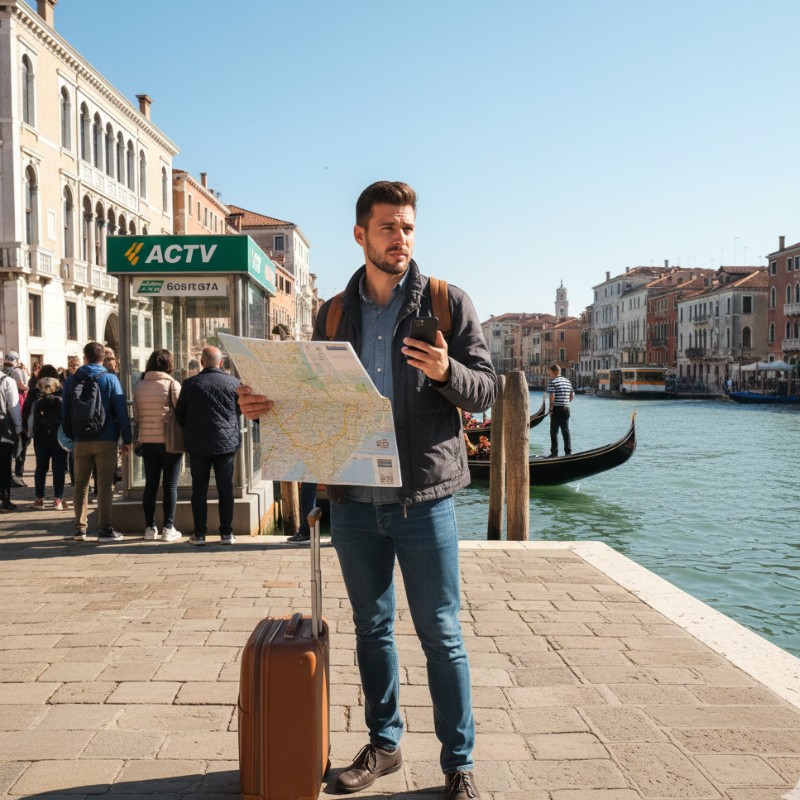
Luggage: Pack as lightly as possible. Venice requires carrying luggage over numerous bridges without elevators or ramps. A wheeled suitcase becomes an awkward burden rather than a convenience. Opt for a backpack or soft duffel bag you can easily carry up and down steps.
Clothing: Venice’s humidity and wind off the Adriatic create changeable conditions. Layer lightweight, breathable fabrics. Bring a light rain jacket year-round. For visiting churches, pack clothing covering shoulders and knees—many enforce strict dress codes and deny entrance to immodestly dressed visitors.
Technology: Download offline maps (Google Maps allows offline area downloads). Bring a portable charger for your phone—you’ll use it constantly for photos, navigation, and translation. Consider a universal adapter for Italian outlets (Type F, 230V).
Getting to Venice from the Airport
Marco Polo Airport (VCE): The main gateway, located 8 miles north of Venice on the mainland. Four transportation options exist:
- Alilaguna Water Bus ($15, 60-90 minutes): Most scenic option, dropping you directly at various Venice locations via the lagoon. Runs every 30 minutes. Best for travelers with light luggage who aren’t in a hurry.
- ACTV Bus #5 to Piazzale Roma ($10, 25 minutes): Budget option reaching Venice’s bus terminal, where you’ll walk or take a vaporetto to your hotel. Runs every 15 minutes.
- Water Taxi ($110-150, 30 minutes): Private boat service delivering you directly to your hotel’s dock. Expensive but worthwhile for groups of 3-4 splitting costs, especially with heavy luggage or late arrivals.
- Land Taxi to Piazzale Roma ($50, 25 minutes): Comfortable but drops you at the bus terminal, requiring additional transport to your final destination.
Treviso Airport (TSF): Used by budget airlines like Ryanair, located 20 miles from Venice. ATVO buses run directly to Venice’s Piazzale Roma ($12, 70 minutes) every 30-60 minutes. Factor in this extra travel time when booking flights, even if fares appear cheaper.
The Best Things to Do and See in Venice for First-Timers
St. Mark’s Square (Piazza San Marco): The Heart of Venice
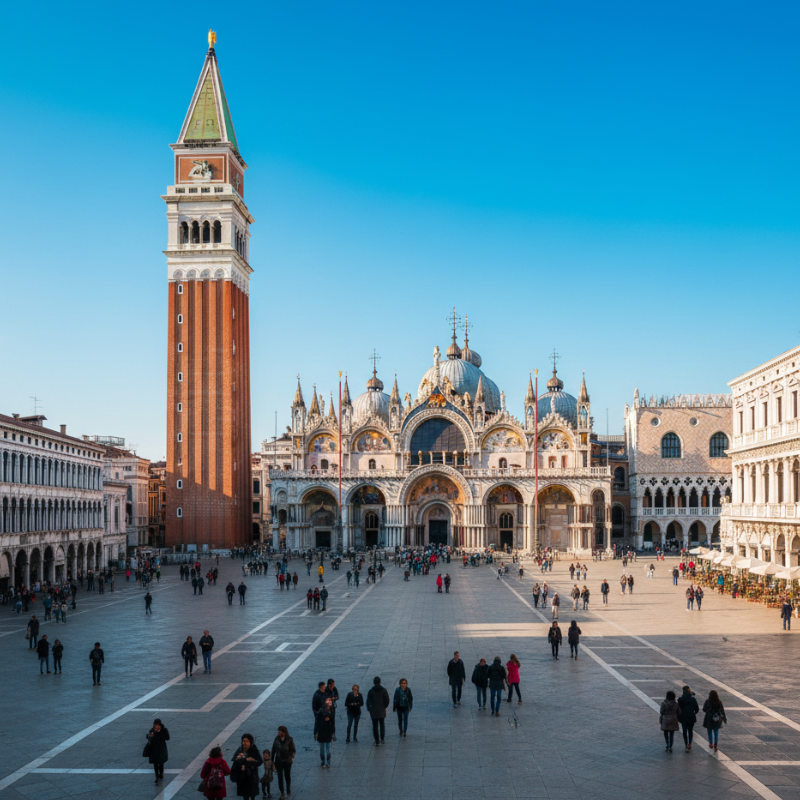
St. Mark’s Basilica: Napoleon called this “the most beautiful drawing room in Europe,” and 1,000 years after construction, St. Mark’s Basilica remains Venice’s most breathtaking monument. This architectural marvel combines Byzantine domes, Gothic arches, and Romanesque sculpture into a unique Venetian style. The interior contains over 85,000 square feet of golden glass mosaics depicting biblical scenes—more than any other church worldwide. The mosaics required centuries to complete, with different artistic styles visible from various eras.
Arrive at opening (9:30 AM) to avoid crowds, or book skip-the-line reservations for €3. The main floor is free, but the museum ($7) and Pala d’Oro altarpiece ($5) require separate tickets—both are worth it. The museum level offers close-up views of mosaics and access to the outdoor terrace with remarkable square views. The Pala d’Oro is an enormous golden altarpiece decorated with 1,300 pearls, 400 garnets, 300 sapphires, 300 emeralds, and 100 amethysts—one of medieval Europe’s greatest treasures.
Doge’s Palace (Palazzo Ducale): For over 1,000 years, this pink-and-white Gothic masterpiece served as the Venetian Republic’s government center and the Doge’s (Duke’s) residence. The palace showcases Venice’s wealth and power through massive chambers decorated by Tintoretto, Veronese, and other Venetian masters. The Great Council Hall could accommodate Venice’s 1,200-member parliament, while the Senate Chamber features Tintoretto’s “Triumph of Venice” ceiling painting.
The Secret Itineraries tour ($28, book ahead) explores hidden areas: the secret archives where Venice stored sensitive documents, the torture chamber, Casanova’s prison cell (he famously escaped in 1756), and the narrow passages where guards and spies operated. The regular route includes crossing the famous Bridge of Sighs, where prisoners glimpsed their last view of Venice before imprisonment—Byron claimed prisoners would “sigh” at the beauty they were leaving behind.
Campanile di San Marco (Bell Tower): This 323-foot brick tower offers Venice’s best panoramic views. Originally built in 912 AD, it dramatically collapsed in 1902 but was rebuilt exactly as before, reopening in 1912. An elevator whisks you to the viewing platform (€10), revealing the entire Venetian lagoon, outlying islands, and on clear days, the Dolomite mountains. Avoid midday crowds by visiting early morning or late afternoon. The bells still ring daily, so cover your ears if present during the hour.
St. Mark’s Square Itself: The square transforms throughout the day. Early morning (6-8 AM) offers photographers the magical sight of empty colonnades and pigeons, with golden sunrise light illuminating the facades. Midday brings overwhelming crowds—10,000+ visitors pack the square during peak season. Evening (6-9 PM) reveals local Venetians promenading while cafes provide live orchestra music (though a coffee costs €12-15 at historic Caffè Florian, operating since 1720). Visit the square multiple times to experience its changing moods.
Acqua Alta in St. Mark’s Square: This lowest point in Venice floods during exceptional high tides. Boardwalks appear along walking routes, creating surreal scenes of tourists wading through a flooded historic square. Rather than a disaster, locals treat it as routine—shops set up pumps, and life continues mostly normally, just wetter.
The Grand Canal: Venice’s Main Boulevard
Vaporetto Ride the Entire Length: Line 1 travels the Grand Canal’s full 2.4-mile S-curve from Piazzale Roma to San Marco, stopping at 14 stations ($9.50 single ride, but buy a multi-day pass). This 45-minute journey showcases over 170 palaces lining the canal, representing 800 years of Venetian architecture. Sit in the front outdoor section for unobstructed views and fresh air.
Key sights along the route: The Calatrava Bridge (modern, controversial), Fondaco dei Turchi (13th-century warehouse), Ca’ d’Oro (Venice’s most beautiful Gothic palace with golden facade—now an art museum), Rialto Bridge (iconic marble bridge from 1591), Ca’ Rezzonico (18th-century palace, now a museum), Palazzo Grassi (contemporary art exhibitions), Santa Maria della Salute (baroque church), and finally, St. Mark’s Basin. Many visitors ride the entire route once for orientation, then again to photograph specific palaces.
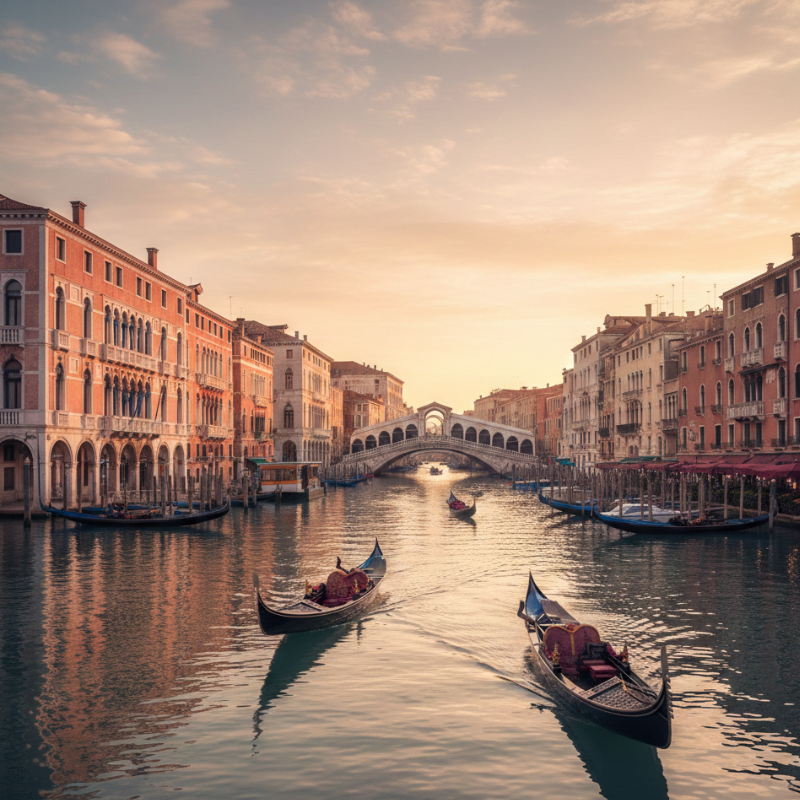
Rialto Bridge (Ponte di Rialto): For 600 years until 1854, this represented the only bridge crossing the Grand Canal, making it Venice’s commercial and geographic center. The current marble bridge dates to 1591, featuring a single 28-meter stone arch—an engineering marvel for its time. Antonio da Ponte won the design competition, defeating proposals from Michelangelo and Palladio.
The bridge’s shops now sell touristy souvenirs, but it remains magnificent, especially photographed from gondolas passing beneath. Visit at sunrise (6-7 AM) to photograph the bridge without crowds, or sunset for golden light illuminating the white marble. The views from the center look down the Grand Canal in both directions, revealing the canal’s famous S-curve.
Rialto Market (Mercato di Rialto): Adjacent to the bridge, Venice’s historic market has operated for 1,000 years. The fish market (Pescheria) opens Tuesday-Saturday, 7:30 AM-12 PM, selling incredible varieties of Adriatic seafood—some species you’ve never seen. Surrounding fruit and vegetable stalls offer perfect picnic supplies. Venetian chefs shop here each morning, and watching their interactions with vendors provides authentic cultural insight. Even if not shopping, the market’s energy and colors justify a morning visit.
Ca’ Rezzonico: This opulent 18th-century palace-museum recreates the lifestyle of wealthy Venetian nobility during the Republic’s final century. Lavishly decorated rooms contain period furniture, Murano glass chandeliers (some with 300+ pieces), Tiepolo ceiling frescoes, and Canaletto paintings. The ballroom regularly hosts classical concerts. The rooftop altana (wooden terrace) offers stunning Grand Canal views. Entry costs €10 and the museum is less crowded than other attractions, providing a peaceful aristocratic Venice experience.
Rialto to San Polo: Markets, Churches, and Hidden Corners
Scuola Grande di San Rocco: Art historians consider Tintoretto’s 50+ paintings in this confraternity building among Renaissance art’s greatest achievements. Tintoretto spent 23 years (1564-1587) creating these massive biblical scenes, developing techniques that influenced Baroque painting. The upper floor contains his masterpieces: “The Crucifixion” (considered by many his greatest work), “Moses Striking Water from the Rock,” and elaborate ceiling paintings requiring mirrors to properly view.
Entry costs €10—a bargain for this caliber of art. The building itself showcases Venetian Renaissance architecture. Visit in the late afternoon (4-5 PM) for smaller crowds and excellent natural light illuminating the paintings. Audio guides provide essential context for understanding the complex biblical narratives.
Frari Church (Santa Maria Gloriosa dei Frari): This massive Gothic church rivals St. Mark’s Basilica for artistic importance. Titian’s “Assumption of the Virgin” altarpiece creates the church’s focal point—its revolutionary use of color and dynamic composition changed Renaissance painting. The church also contains Titian’s tomb, Bellini’s triptych “Madonna and Child with Saints,” Donatello’s wooden statue of St. John the Baptist, and monuments to numerous doges.
The stark Gothic interior contrasts dramatically with St. Mark’s Byzantine opulence, demonstrating Venice’s architectural diversity. Entry costs €3 (a steal for this art collection). The church sits in a quiet square where locals gather, providing a glimpse of neighborhood life.
Campo San Polo: Venice’s second-largest square serves as a neighborhood gathering spot. Children play soccer, elderly Venetians chat on benches, and the campo hosts summer outdoor cinema screenings. Several excellent restaurants line the square, offering outdoor dining with authentic atmosphere. The square reveals residential Venice—unpolished, lived-in, and refreshingly normal after touristy areas.
Gondola Traghetto Crossings: These gondola ferries cross the Grand Canal at seven points where no bridges exist, costing just €2 (stand like locals) versus €80-100 for a romantic gondola tour. The crossings take 60 seconds but provide a legitimate gondola experience while serving a practical transportation purpose. Locals use them constantly, and standing in a rocking gondola while it’s rowed across the Grand Canal creates an authentic, memorable moment.
Dorsoduro: Art, University Life, and Sunset Views
Gallerie dell’Accademia: Venice’s premier art museum houses the world’s greatest collection of Venetian painting from the 14th-18th centuries. Highlights include Giorgione’s mysterious “The Tempest,” Titian’s final painting “Pietà,” Veronese’s “Feast in the House of Levi,” Tintoretto’s “Miracle of the Slave,” and comprehensive collections of Bellini, Carpaccio, Canaletto, and Tiepolo.
The chronologically arranged rooms trace Venetian painting’s evolution from Byzantine influences through Gothic, Renaissance, and Baroque periods. Plan 2-3 hours for a thorough visit. Entry costs €15. Buy tickets online to skip queues. The museum’s palazzo location provides historical context—these paintings hung in similar buildings throughout their history.
Peggy Guggenheim Collection: American heiress Peggy Guggenheim’s former palazzo showcases her extraordinary modern art collection: Picasso, Dalí, Kandinsky, Pollock, Rothko, and other 20th-century masters. The palazzo sits directly on the Grand Canal, with a sculpture garden featuring works by Moore, Giacometti, and Calder. Guggenheim’s tomb sits in the garden beside her beloved dogs.
The intimate scale (compared to massive museums) makes the collection approachable and engaging. Entry costs €16. The museum cafe offers Grand Canal seating—a perfect lunch spot. Visit in the morning for quieter galleries or late afternoon when most other museums close.
Punta della Dogana: This triangular point where the Grand Canal meets the Giudecca Canal now houses cutting-edge contemporary art exhibitions in a beautifully restored 17th-century customs house. François Pinault’s collection rotates exhibitions several times annually, featuring international artists like Damien Hirst, Jeff Koons, and Marlene Dumas. Entry costs €15 (combined ticket with Palazzo Grassi for €20).
The building itself merits a visit—Japanese architect Tadao Ando’s minimalist renovation creates stunning contrast with the historic shell. Climb to the building’s point for remarkable views where the canals meet.
Zattere Waterfront Promenade: This sunny, nearly mile-long walkway along the Giudecca Canal provides Venice’s best sunset viewing spot. Locals jog, walk dogs, and socialize along the wide fondamenta while tourists photograph the changing light. Gelato shops (try Nico’s famous gianduiotto) line the route. The Church of Santa Maria della Salute anchors the eastern end, while views extend to Giudecca Island across the canal.
Visit in late afternoon, grab gelato, and stroll toward sunset. The Zattere offers a rare wide-open space in Venice’s compact urban fabric. Several floating restaurant barges (including the popular Punta della Dogana restaurant) dot the canal, creating a lively waterfront scene.
Cannaregio: The Jewish Ghetto and Authentic Venice
The Jewish Ghetto: The word “ghetto” originated here in 1516 when Venice confined its Jewish population to this island area, gated and locked at night. Despite restrictions, Venice’s Jewish community thrived, creating five synagogues (one each for Italian, German, Spanish, Portuguese, and Levantine communities) packed into the small space. Today, the ghetto remains the center of Venice’s Jewish community with museums, synagogues, kosher restaurants, and monuments to Holocaust victims (200+ Venetian Jews died in concentration camps).
The Jewish Museum offers guided synagogue tours (€12, English tours at set times) revealing these hidden architectural gems built inside ordinary-looking buildings. The tall buildings—six to seven stories versus Venice’s typical three—resulted from space restrictions forcing vertical construction. The area’s quiet, contemplative atmosphere contrasts sharply with Venice’s tourist chaos.
Madonna dell’Orto Church: This Gothic church in northern Cannaregio contains stunning Tintoretto paintings (he lived nearby and worshipped here). His massive works include “The Last Judgment” and “The Making of the Golden Calf,” both covering entire walls. The church sees few tourists despite housing significant art. Entry costs €3. The surrounding neighborhood exemplifies authentic Venice—washing hanging between buildings, locals going about daily routines, and campo serving as community gathering spots.
Fondamenta della Misericordia: This canal-side street has become Venice’s nightlife center, lined with bars, restaurants, and bacari (wine bars) frequented primarily by Venetians, university students, and savvy tourists. Outdoor seating extends along the fondamenta in warm weather, creating a lively social scene. Arrive around 7-9 PM for the Venetian ritual of aperitivo—drinks accompanied by complimentary snacks. Prices run 30-40% below tourist areas.
Islands of the Lagoon: Murano, Burano, and Torcello
Murano Island: Famous for glass-making since 1291, when Venice’s government moved all glassmakers here to prevent fires in the main city. Today, dozens of glass factories and showrooms offer demonstrations of master glassblowers creating intricate pieces—vases, chandeliers, sculptures, jewelry—using centuries-old techniques. The Murano Glass Museum (€10) explains 700 years of glass-making history with extraordinary examples.
Vaporetto lines 4.1/4.2 or 12 reach Murano in 15-20 minutes from Venice (€9.50 or included in multi-day passes). Wander between furnaces, watching artisans shape molten glass, then browse (but don’t feel pressured to buy—prices are high). The island itself offers pleasant, less crowded walking compared to Venice proper. Plan 2-3 hours.
Burano Island: If Venice seems colorful, Burano appears psychedelic. Local fishermen traditionally painted houses in bright colors—yellows, blues, pinks, purples—to identify their homes when returning through fog. Today, strict regulations govern color choices (homeowners must obtain permission from government to repaint, using only approved colors). The result is Instagram’s dream: every canal and street creates kaleidoscopic photo opportunities.
Burano also maintains lace-making traditions, though today’s lace mostly comes from China—genuine Burano lace costs hundreds per piece due to the incredible handwork required. The Lace Museum (€5) displays historical examples. Excellent seafood restaurants line the canals. Vaporetto line 12 from Venice takes 40 minutes (€9.50 or pass). Combine with Murano in a half-day trip or spend a full leisurely day exploring both islands.
Torcello Island: Once Venice’s most important settlement (7th-9th centuries), housing 20,000 residents, Torcello now contains fewer than 20 permanent inhabitants. The Byzantine cathedral (built 639 AD) remains, featuring remarkable gold-ground mosaics rivaling Ravenna’s famous works. The “Last Judgment” mosaic covering the west wall depicts medieval hell in terrifying detail. The island’s rustic, nearly deserted atmosphere provides profound contrast with Venice’s crowds—wandering the overgrown paths feels like archaeological exploration.
Vaporetto 12 continues from Burano to Torcello (10 minutes). The cathedral entry costs €5. The island has one expensive restaurant (Locanda Cipriani, where Hemingway stayed) and one casual cafe. Budget 90 minutes unless you’re seeking extended peaceful contemplation. Visiting all three islands in one day is possible but rushed—consider splitting across two days or choosing Murano + Burano as the priority combination.
Beyond the Main Attractions: Hidden Venice Experiences
Getting Lost Intentionally: Venice’s greatest pleasure often comes from abandoning maps and wandering randomly through backstreets, discovering tiny campi (squares), crossing countless bridges, and stumbling upon hidden churches, local wine bars, and quiet canals without tourists. These unplanned explorations frequently create the most memorable moments—a locals-only campo where elderly Venetians socialize, a tiny bakery selling warm pastries, a workshop where an artisan restores gondolas using 500-year-old techniques.
Dedicate at least one afternoon to wandering without destination. When lost (you will be), follow yellow signs pointing to major landmarks: “Per Rialto,” “Per San Marco,” “Per Ferrovia” (train station). Getting lost in Venice is safe, inevitable, and often magical. Venice’s compact size means you’ll never be more than 20 minutes from a major landmark.
Common Mistakes First-Time Visitors Make in Venice (And How to Avoid Them)
Mistake 1: Eating in Tourist Trap Restaurants Near San Marco
The restaurants immediately surrounding St. Mark’s Square represent Venice’s worst dining—overpriced, mediocre quality, rushed service designed to turn tables quickly. A simple pasta dish costs €25-30, pizza runs €18-22, and cover charges add another €5 per person. Worse, the food quality doesn’t justify these prices. These establishments survive on location and tourists who don’t research better options.
How to Avoid It: Walk just 10 minutes from San Marco in any direction to find authentic restaurants frequented by locals. Look for places where menus list prices clearly, avoid those with aggressive hawkers outside, and trust restaurants where you see Venetians dining. Neighborhoods like Cannaregio, Dorsoduro, and eastern Castello offer excellent restaurants at 30-40% lower prices with superior quality. Check Google Maps reviews (look for recent Italian reviews—a good sign), or ask your hotel for recommendations. Reserve ahead for popular spots during high season.
Budget Alternatives: Venice’s numerous bacari (wine bars) serve cicchetti (Venetian tapas)—small plates like baccalà mantecato (whipped cod), sarde in saor (sweet-and-sour sardines), and polpette (meatballs) for €2-4 each. Order 4-5 cicchetti with a glass of local wine for a delicious, affordable meal. Markets sell fresh produce, cheese, prosciutto, and bread perfect for picnic lunches in quiet campi or along canals.
Mistake 2: Only Exploring the San Marco Area
Many first-time visitors spend their entire trip in Venice’s geographic triangle between San Marco, the Rialto Bridge, and the train station, missing 75% of the city. They see the main attractions but miss authentic Venice—the neighborhoods where Venetians actually live, work, and socialize. This creates a distorted impression that Venice is entirely a tourist theme park rather than a functioning city with rich residential life.
How to Avoid It: Deliberately explore each of Venice’s six sestieri. Eastern Castello around Via Garibaldi offers quintessential Venetian neighborhood life with local markets, simple trattorias, and residents going about daily routines. Northern Cannaregio showcases the Jewish Ghetto and excellent dining. Dorsoduro provides university atmosphere, significant art museums, and the beautiful Zattere waterfront. Even San Polo contains quiet residential areas away from Rialto’s chaos.
Conclusion: Making the Most of Your First Venice Adventure
Venice is a city unlike any other, where every corner tells a story and every canal reflects centuries of history, art, and culture. From the breathtaking grandeur of St. Mark’s Basilica and the Doge’s Palace to the charming backstreets of Cannaregio and Dorsoduro, first-time visitors are offered an endless variety of experiences that cater to both adventure seekers and those looking for romantic, serene escapes. Exploring Venice by gondola or vaporetto, tasting cicchetti in traditional bacari, or simply getting lost in the labyrinth of canals allows travelers to connect with the city on a deeper, more authentic level.
Planning is key to making the most of your trip. By considering the best time to visit—whether during the quieter spring and autumn months or the lively summer peak—you can avoid crowds and enjoy Venice at your own pace. Spending 2–4 days will give you enough time to see the iconic landmarks while also exploring hidden gems, local neighborhoods, and nearby islands like Murano, Burano, and Lido. Selecting the right accommodation, packing appropriately, and booking popular attractions in advance will ensure a smooth and stress-free experience.
Many travelers who have followed these tips report life-changing experiences. According to TripAdvisor and Lonely Planet reviews, Venice consistently ranks among the world’s most romantic, unique, and photogenic cities, with couples praising its magical atmosphere and solo travelers loving the freedom to wander. Social media posts with hashtags like #VisitVenice or #VeniceBucketList showcase how much visitors fall in love with this floating city.
Don’t just dream about Venice—experience it. Start planning your adventure today by choosing your ideal itinerary, booking accommodations with easy water access, and leaving room for spontaneity. Even a simple stroll through a quiet canal or a sunset gondola ride can become a cherished memory. Remember, Venice is slowly changing due to climate challenges, so there’s no better time to visit than now.
For more practical advice, check out our detailed guides: Ultimate 3-Day Venice Itinerary for first-time travelers, or explore our Hidden Gems in Venice for a unique experience away from the tourist crowds. You can also visit the official Venice Tourism Website for up-to-date information on events, transportation, and safety tips.
Embrace the magic, plan wisely, and let Venice capture your heart—your first adventure in this extraordinary city will be one you’ll remember forever.